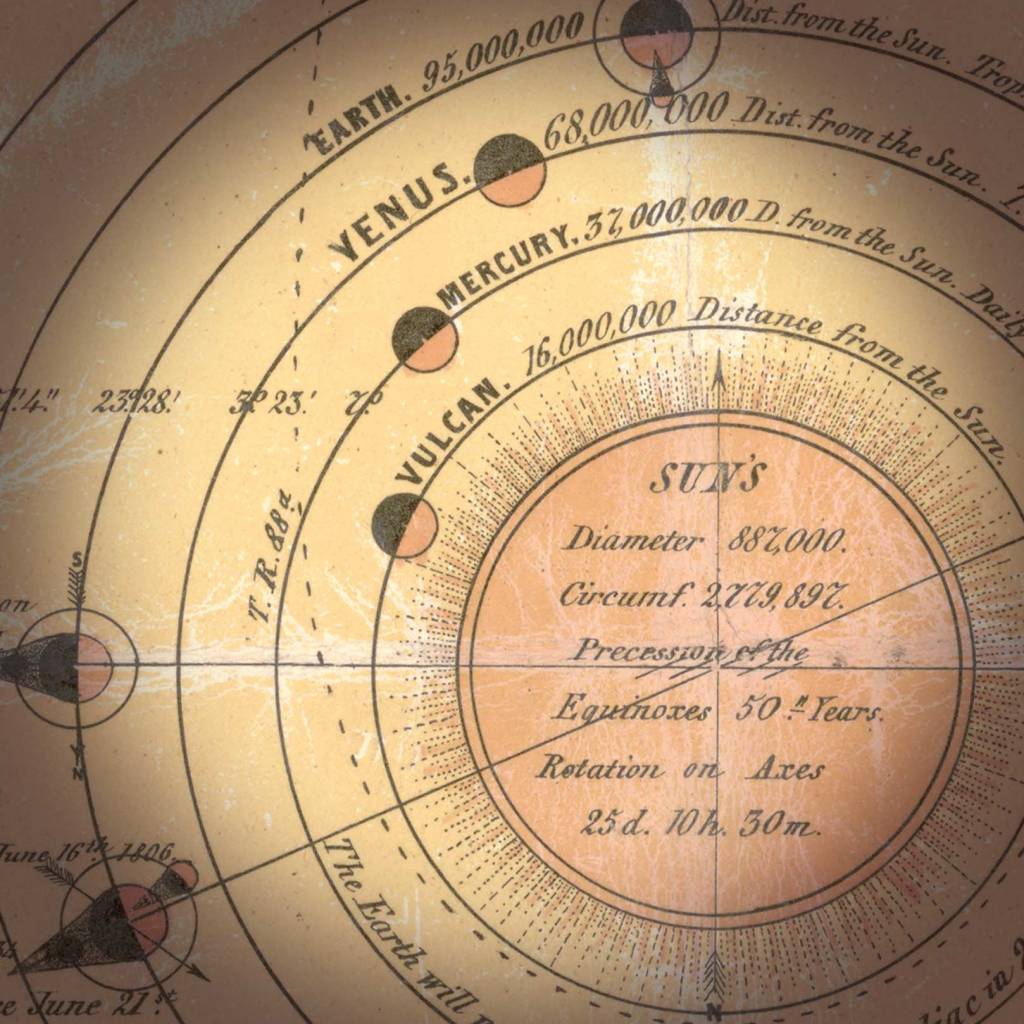
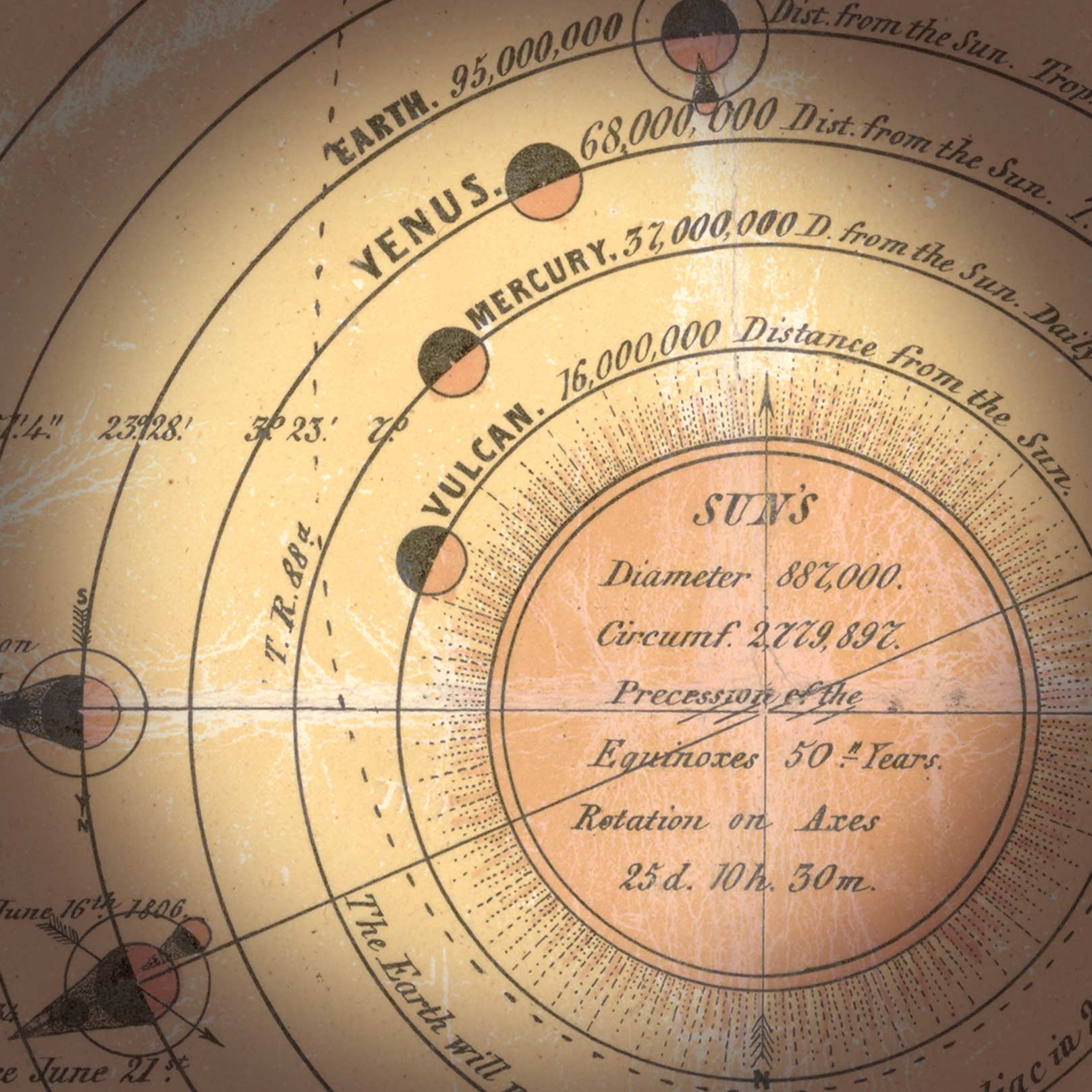
Source : Rochester, N.Y. : [Publisher not identified], 1846.
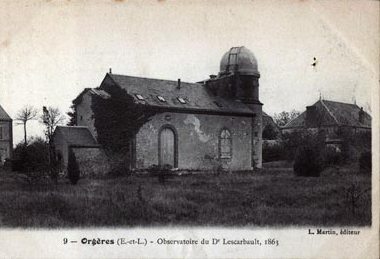
Source : L. Martin
On a French winter day in December of 1859, he left everything behind rushing to Orgères, after receiving the news that someone had finally found what he worked effortlessly searching for, Vulcan, the long sought for planet he theorized to describe the perihelion motion of Mercury.
Urbain Le Verrier was one of the most skilled French astronomers of the 19th century, having discovered Neptune, and known as ” the man who discovered a planet with the point of his pen.”
He realized that the motion of Mercury is quite peculiar to as compared to other planets, more accurately it precesses as it revolves around the sun ( see fig.1 ), meaning every time it completes one cycle around the Sun, it seemed to be moving a bit further than it was when it first started its revolution. For example, If it started at position 1 in the figure, it doesn’t return to position 1, but ends up at position 2, and so on… This behavior was unexplained at that time. Will Le Verrier’s theory explain it ?
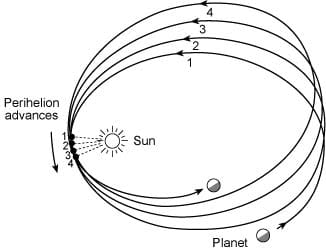
Fig 1. Precession of a planet. Credit: Kenneth R. Lang
Le Verrier theorized that there exists an undiscovered planet he called Vulcan, between Mercury and the Sun, causing this precession. And the scientific community had no reason to doubt him, after all, he did discover Neptune, and astronomers placed faith in his theory. All he was waiting for is the right time to observe it, a transit of Vulcan on the Sun. ( A transit of a planet on the Sun is seen as a small dot walking on the surface of the Sun as the planet travels in front of the Sun, Fig.2 )
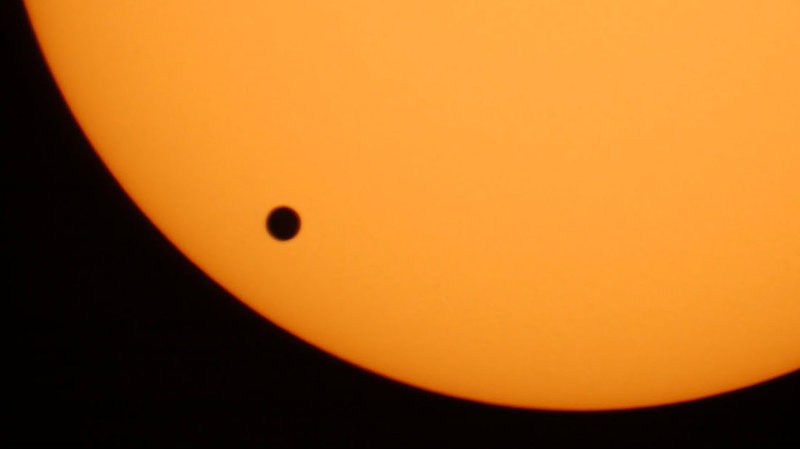
Geert Vanden Wijngaert/AP
Only three months after presenting his theory, Le Verrier received a letter from Edmond Lescarbault who lived in Orgères near Rennes saying he had observed the transit of Vulcan nine months earlier. Frustrated and angry, Le Verrier rushed to Orgères to meet with Monsieur Lescarbault. How could someone find such a discovery and hide it for himself and not share it with the scientific community ?
“It is then you, Sir, who pretend to have observed the intra-Mercurial planet, and who have committed the grave offence of keeping your observation secret for nine months. I warn you I have come here with the intention of doing justice to your pretensions, and of demonstrating either that you have been dishonest or deceived. Tell me, then, unequivocally, what you have seen.”
J D Fernie, Marginalia: In Pursuit of Vulcan, American Scientist 82 (5) (1994), 412-415.
Checking Lescarbault’s data, Le Verrier was convinced that Lescarbault has truly observed the transit of Vulcan. Le Verrier was desperate to believe this observation, especially that Lescarbault did observe the transit months before Le Verrier published his theory. In fact, he had more reason to believe in him, because he wanted his theory to be correct, so he kind of convinced himself that the data was indeed the transit of Vulcan.
However, many other astronomers disagreed on that data, how could Lescarbault be the only one who had seen the transit when no one else did ? The theory that Le Verrier was working so hard to develop was now put into question, so Le Verrier had no other choice but to observe that transit and record it himself.
July 18, 1860, Le Verrier packed his instruments, tools, pen and a papers and off he went to Spain, leading an expedition with his fellow astronomers to observe the total eclipse through which he hoped to finally see his dream of a Vulcan transit coming true.
Le Verrier went back to France with his head down, as his dream seemed to be drifting away from him into the space he was observing. No Vulcan transit was seen…
Fact is, Le Verrier was a magnificent yet a detestable astronomer as many who worked with him would say. We could tell from the way he communicated with Lescarbault. Since 1854 he was the director of the Paris Observatory, and it is said he was a strict person, always dissatisfied and insisting on a military-like discipline, which made almost all the staff to resign. Le Verrier was eventually removed from his post in 1870 due to his unpopularity among the staff. It wasn’t long until Le Verrier died in 1873 after suffering from a liver disease. He was 66 of age.
Urbain Le Verrier, perhaps not the most loved person, but surely one of the most influential astronomers who had contributed immensely to the scientific community.
But what happened to the precession of Mercury ? What was causing this planet to orbit so differently after all ? Was Vulcan ever discovered ?
No, Vulcan was never there in the first place, and Le Verrier was wrong. It took another 50 years until another magnificent young scientist showed up to the scene of physics and astronomy and changed our perspective of the universe, and finally explained the perihelion of Mercury, who else would it be than the famous Albert Einstein. But this will be a story for another day.


 Ali Lezeik
Leave a reply to Riham Lezeik Cancel reply